One checkout, different ways to pay.
How UPI, PayPal and USDC fit into a shared order flow without hiding their differences.
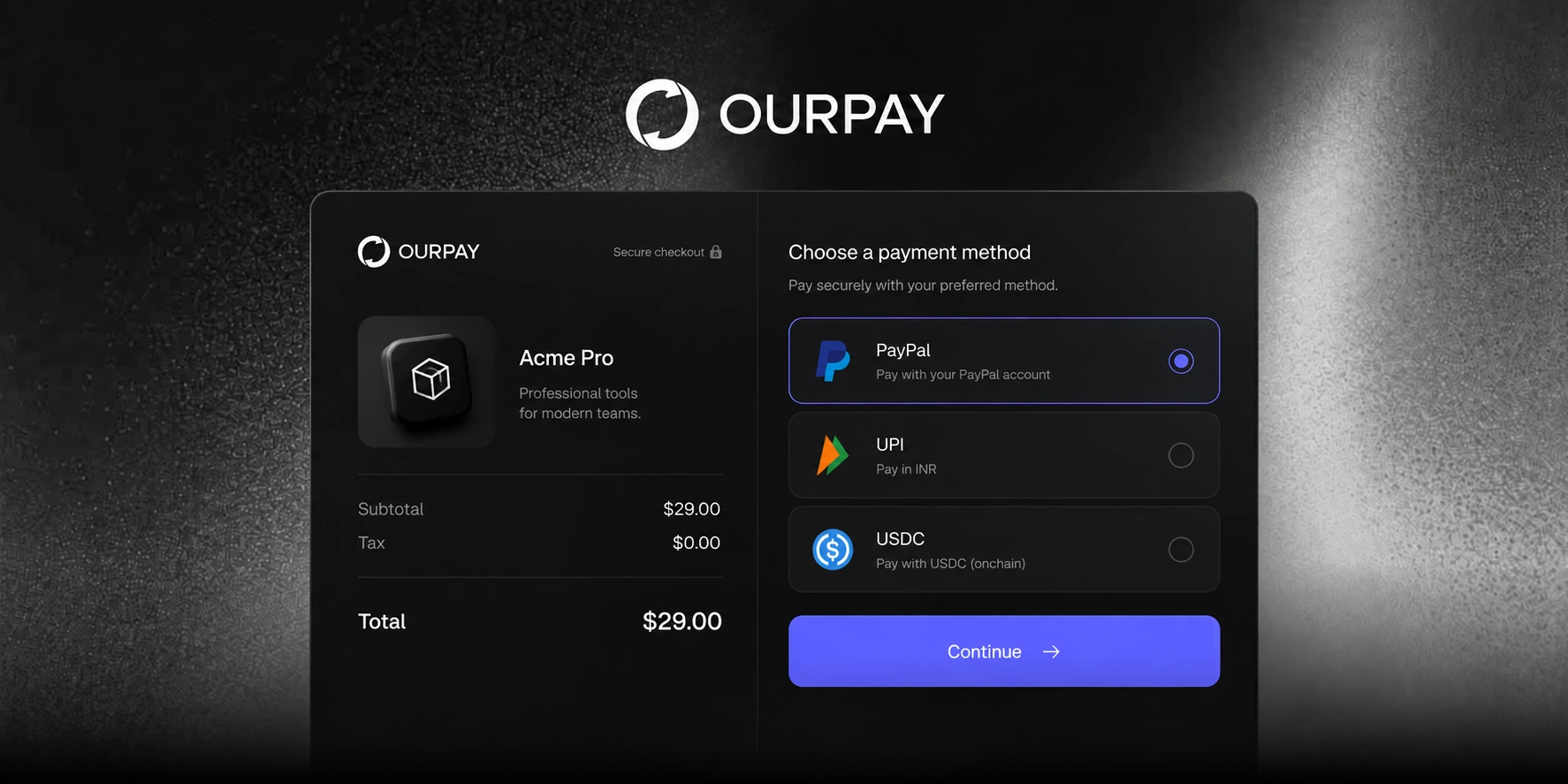
Let the buyer start with a familiar method
A payment selector should answer a simple question: how would you like to pay? It should also tell the buyer when that choice changes the currency, requires a wallet or opens a payment app.
OurPay keeps products and orders in one integration while giving each method its own payment step. The methods available depend on the seller’s configuration and the checkout’s eligibility.
UPI needs an INR amount
UPI and domestic bank transfers use INR. A product displayed in another currency still needs an INR checkout amount before the buyer can pay by UPI. The buyer should see that amount before proceeding.
The QR sends the payment to the seller’s configured receiving account. Displaying an OurPay logo above it does not change the bank-verified recipient shown by a UPI app. Until a bank-backed confirmation feed is connected, a submitted receipt is evidence for review, not automatic proof of payment.
Wallet payments need a supported network
For one-time USDC checkout, OurPay can check a connected wallet’s balances on supported networks and suggest an eligible network. The buyer still approves the transaction in their wallet. A balance on an unsupported network cannot be silently treated as a balance on a supported one.
PayPal has a separate approval flow. A buyer returning from that flow and a wallet broadcasting a transaction are intermediate steps; the order must follow the verified payment result.
Keep the seller’s view consistent
Regardless of the method, the seller needs an order, an amount, a customer and a clear payment status. That shared record is the useful abstraction. Currency, fees, settlement and refund capabilities still belong to the underlying payment method.